
Running a Sex Offender Check in Turner County
The Georgia Sex Offender Registry is the primary public search for Turner County. GBI operates the statewide application. Turner County Sheriff supplies and verifies local registration information as required by Georgia law. The sheriff's services page links readers to the registry, but no separate Turner County offender map or local list was documented. Use the state search as the current public database.
Prepare a name spelling or a local geographic area before searching. A county filter can focus the result list on Turner County, while a name search can follow a person whose location is uncertain. Review the system disclaimer first. Results are public safety information, not proof of current conduct. Profile details can also lag as agencies process a new registration or address change.
Turner County Offender Registry Roles
Two agencies have different jobs. The Georgia Bureau of Investigation runs the registry system and publishes qualifying data. The Turner County Sheriff's Office handles local registration and verification duties. The local registration office is at 1301 Industrial Drive, Ashburn, Georgia 31714. Call 229-567-2401 for current instructions. Official sources did not publish registration hours, appointment rules, or fees, so confirm those details before visiting.
The sheriff can receive factual information about a Turner County address or suspected failure to comply. GBI maintains the statewide public platform and explains registration rules. The Sexual Offender Registration Review Board, often called SORRB, assesses risk and assigns Georgia classifications. It does not operate the GBI search. Knowing which agency owns which task helps a caller reach the right office.
Searching the Georgia Sex Offender Registry
The state application supports name and geographic searching. Begin with the most reliable fact you have. Avoid guessing at personal details. If a name search fails, check spelling and then use the Turner County or other geographic controls. Open the matching profile only after comparing the displayed photo, aliases, and physical traits. A shared name alone is not enough to identify a person.
- Open the official registry and read its disclaimer and conditions of use.
- Enter a name or choose Turner County and available city, ZIP, address, list, or map controls.
- Review the result list and compare more than one identifier before selecting a profile.
- Read the full profile, including status, address, offense jurisdiction, and Georgia risk classification.
- Use NSOPW when a person may have a registration record in another state.
- Call Turner County Sheriff if a local address or status appears stale, and do not confront anyone.
| Search control | Type | Required | Use |
|---|---|---|---|
| Offender name | Text | No | Search carefully because spelling can cause a missed result. |
| County | Dropdown | No | Select Turner for a county-focused list. |
| City, ZIP, or address | Text or selection | No | Availability can vary with the application view. |
| Search, list, or map | Button or tab | To view results | Use the view offered by the live application. |
| Reset or clear | Button | No | Removes entered criteria. |
The official registry search is pictured below as the direct source for these controls.
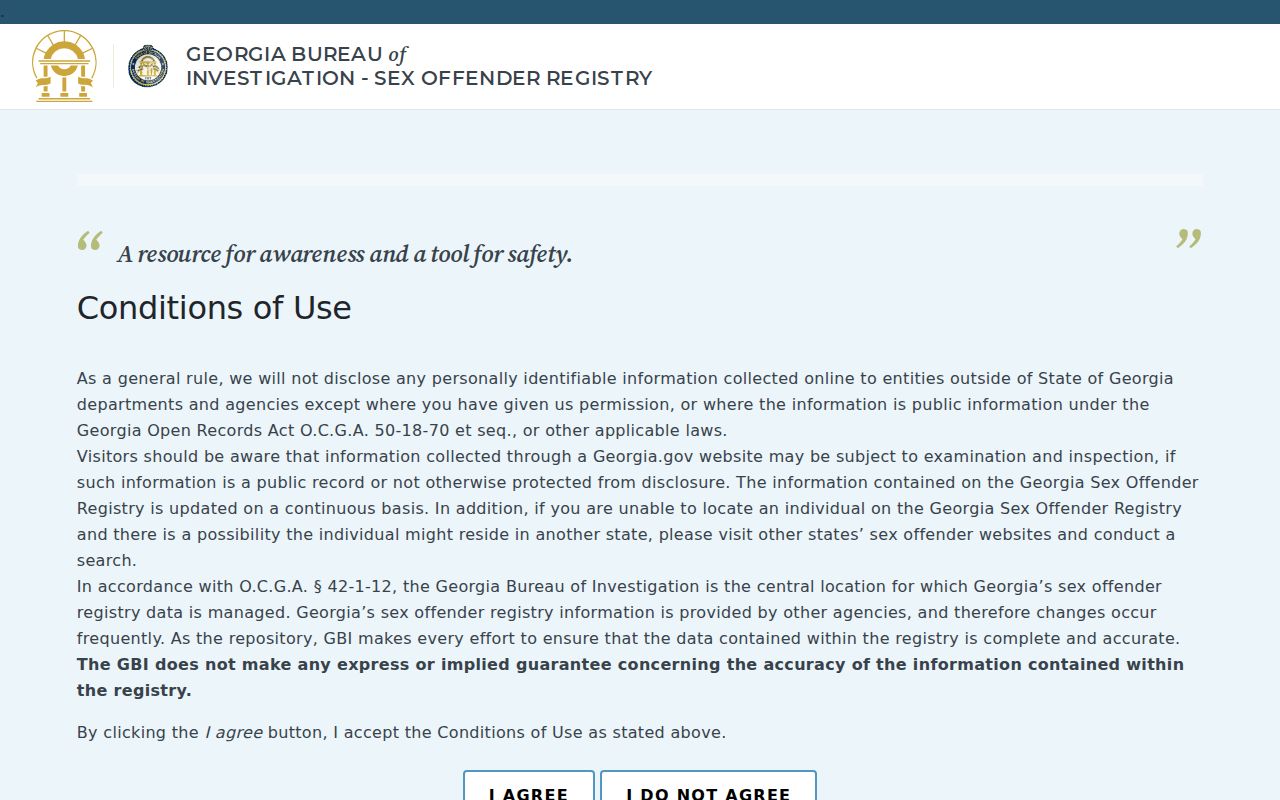
The county filter and profile review tools make it the main official path for a Turner County registry check.
Why Turner County Registry Results Vary
A no-result screen is not a certificate that a person never committed a sexual offense. The GBI registry FAQ lists several reasons a person may not appear. The person may be deceased, may not meet Georgia's registration requirements, may be newly registered but not yet submitted, or may have completed a qualifying First Offender sentence. Search criteria can also be wrong.
Start by checking spelling and geography. Then consider the conviction jurisdiction and the date of the information. If a Turner County address appears out of date, report the factual concern to the sheriff. Do not treat a lag as proof of noncompliance. Local officials can compare the public record with information they are authorized to maintain.
GBI's official registry explanation of missing results and registration rules is shown here.
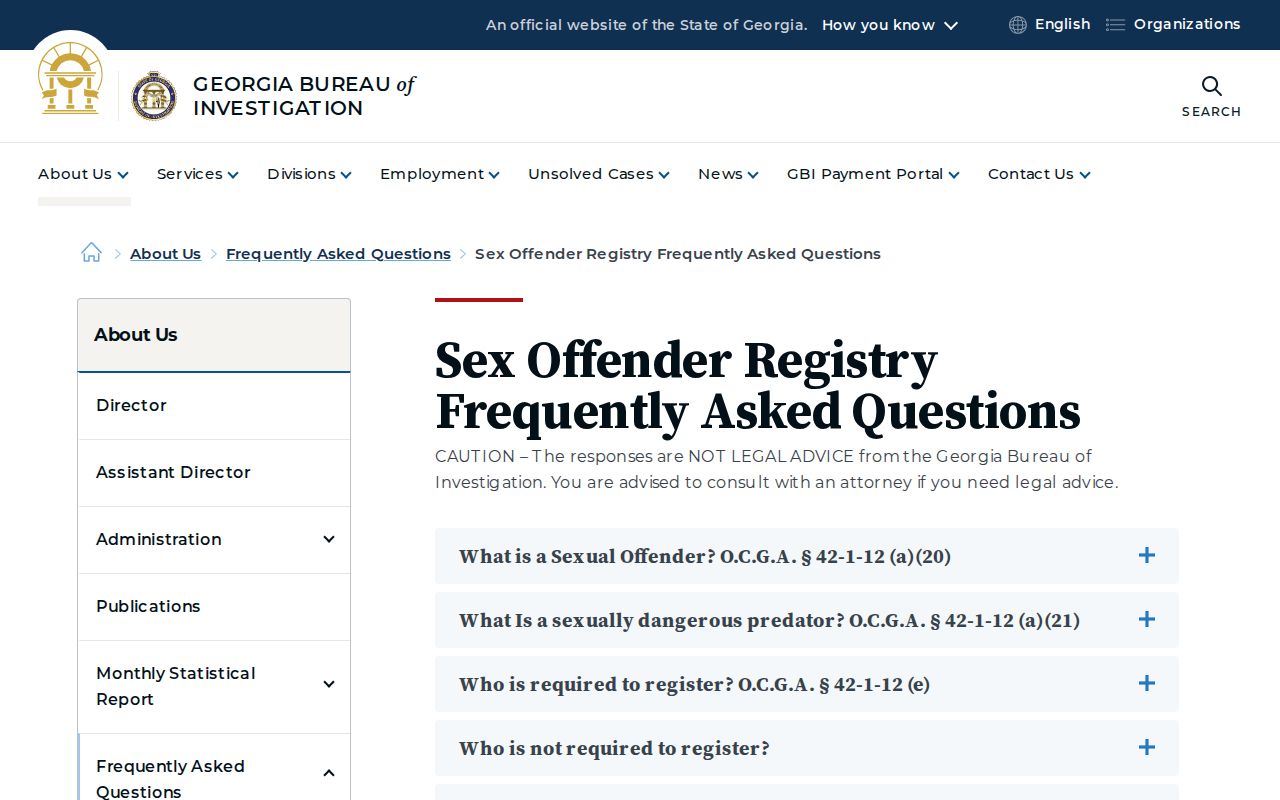
The FAQ supplies the needed caution behind any no-result screen and keeps the search grounded in Georgia's actual rules.
What a Registry Profile Shows
A public profile combines identifying, location, offense, and registration information reported through the Georgia system. Read the whole record. A photo and name help with identity, while aliases and physical descriptors help distinguish people with similar names. Address information shows the public location detail allowed by law. Offense and jurisdiction fields describe the qualifying conviction rather than a new allegation.
| Name and aliases | The reported legal name and other names supplied to the registry. |
|---|---|
| Photo and descriptors | Photograph, sex, race, and physical details where reported. |
| Residence information | Address information at the level Georgia law permits for public display. |
| Offense and jurisdiction | The qualifying conviction description and the place tied to it. |
| Risk classification | Level I, Level II, sexually dangerous predator, or an incomplete classification where shown. |
| Registration status | Public status and update information supplied through the system. |
Some profiles may contain additional identifying features. Confirm fields in the live application because agency submissions can be incomplete or delayed. Do not infer a fact that the profile does not state.
Turner County Offender Checks and NSOPW
The Georgia registry is best for a county-focused search within the state. The National Sex Offender Public Website, operated by the U.S. Department of Justice, adds a cross-jurisdiction layer. It is useful when a person may have lived, worked, or registered outside Georgia. NSOPW draws from participating public registries rather than creating a new Turner County record.
Use both sources for different questions. Search Georgia first for current Turner County data and state-specific classification. Then use NSOPW to check other jurisdictions. If the sources differ, confirm the relevant status with the registry authority rather than choosing the result that seems more complete.
The federal national-search layer appears below from its official NSOPW source.
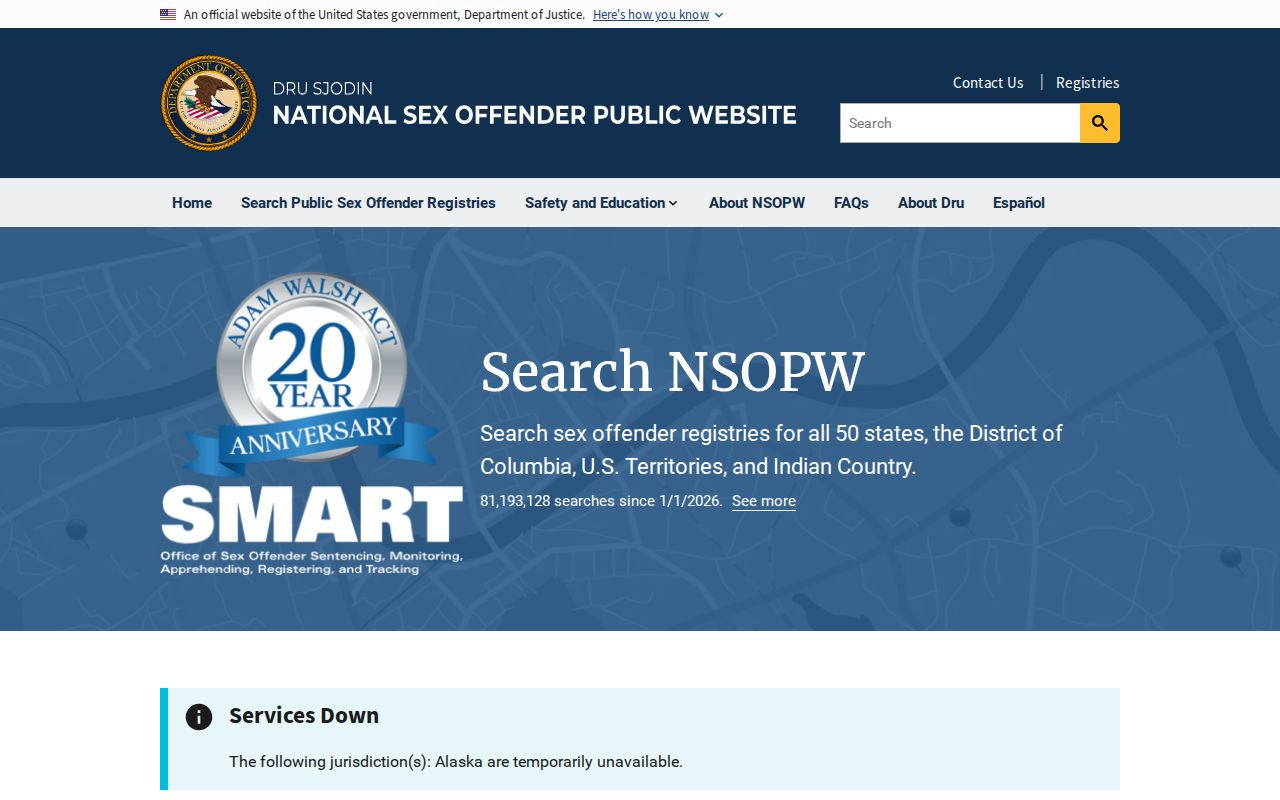
That broader search helps when a Turner County safety question crosses a state line, while GBI remains the Georgia source.
Registration Requirements and Levels in Georgia
Georgia should not be described with a generic federal Tier I, II, and III chart. SORRB uses Georgia classifications: Level I, Level II, and sexually dangerous predator. A profile may also lack a completed classification. GBI operates the registry, while SORRB conducts the risk assessment. Classification and registration duration are related legal issues, but the label alone does not set a simple universal end date.
| Georgia label | Meaning | Duration and public effect |
|---|---|---|
| Level I | Lower assessed risk under Georgia's process. | Registration continues unless lawful relief is granted; the label may affect petition eligibility. |
| Level II | Higher assessed risk under the state process. | Statutory registration continues unless a court grants relief. |
| Sexually dangerous predator | A statutory or board designation tied to future-risk findings. | Enhanced duties apply; consult the current statute and governing order. |
| Not yet classified | The board assessment may be incomplete. | Lack of a label does not mean lack of registration. |
O.C.G.A. §42-1-12 controls the core registration duty. A person moving to another state must notify the last Georgia registering sheriff and register with the new state's agency within 72 hours of establishing residence. GBI also states that juveniles do not register unless tried and convicted as adults.
Turner County Registry Address Concerns
When a Turner County profile address seems old, first check the displayed status and update information. Compare the name, photo, aliases, and offense jurisdiction so the concern is tied to the correct person. Note the factual location information that raised the issue. Then call Turner County Sheriff at 229-567-2401. The sheriff can handle local compliance information within its authority.
Do not visit the address, confront a registrant, publish an accusation, or treat an online delay as a crime. A new registration may not yet have reached the public system. A person may also have moved under rules that require notice to more than one jurisdiction. Official verification protects both community safety and accuracy.
Turner County Registry Release Petitions
Ten years is not a universal Georgia registration term. GBI explains that some qualifying people may petition Superior Court for release under O.C.G.A. §42-1-19. A person with a Georgia conviction files where convicted. A person with an out-of-state conviction files where they reside. The district attorney and relevant sheriff or sheriffs must be served.
One statutory route involves ten years after completion of prison, parole, supervised release, and probation, or a Level I classification, together with other legal criteria. A court decides the petition. If relief is denied, another petition cannot be filed within two years. Until an order or other lawful event ends the duty, registration continues as required. Searchers should therefore read current status rather than compute an end date from a conviction year.
Turner County Registry Move Rules
A registrant who moves across state lines has duties in both places. Georgia requires notice to the last registering sheriff and registration with the new state's agency within 72 hours of establishing residence. For a move from Turner County, the local sheriff is therefore one part of the process. The destination state's rules form the other part.
A public user should not try to decide whether those steps occurred from a map point alone. Search Georgia and NSOPW, note the facts, and send a concrete concern to the proper registry office. Agency staff can check information that is not shown to the public.
Turner County Registry Distance Rules
Georgia law includes 1,000-foot provisions and exceptions in circumstances covered by the statute. The offense, date, location type, and governing legal terms all matter. A Turner County address near a school, child-care site, or other place cannot be labeled unlawful from a rough online map without that analysis.
Use the registry for awareness. If a location raises a concern, give Turner County Sheriff the exact public profile and location facts. That approach avoids a false claim and lets the local registration authority review the applicable rule.
Lawful Use and Community Notification
Registry information supports personal, family, and neighborhood safety planning. Use it to learn what the official record says, to understand a reported location, and to give factual compliance concerns to Turner County Sheriff or GBI. Georgia's system can include public profile information and risk classifications, but it does not grant permission to punish, threaten, or expose a registrant or household.
Residency limits are also fact-specific. Georgia law includes applicable 1,000-foot provisions and exceptions, with the result affected by the offense, date, and governing law. A map point alone cannot establish a violation. Report the location facts to the sheriff and allow the responsible agency to assess compliance.
Use registry data lawfully: O.C.G.A. §42-1-12 warns that registry information must not be used to harass or commit a crime against a registrant or household.
Safety comes from accurate use. Save the official profile details needed for a report, avoid broad claims, and verify changes through the Turner County registration office or GBI.